
Static platform. Dynamic postural strategies.

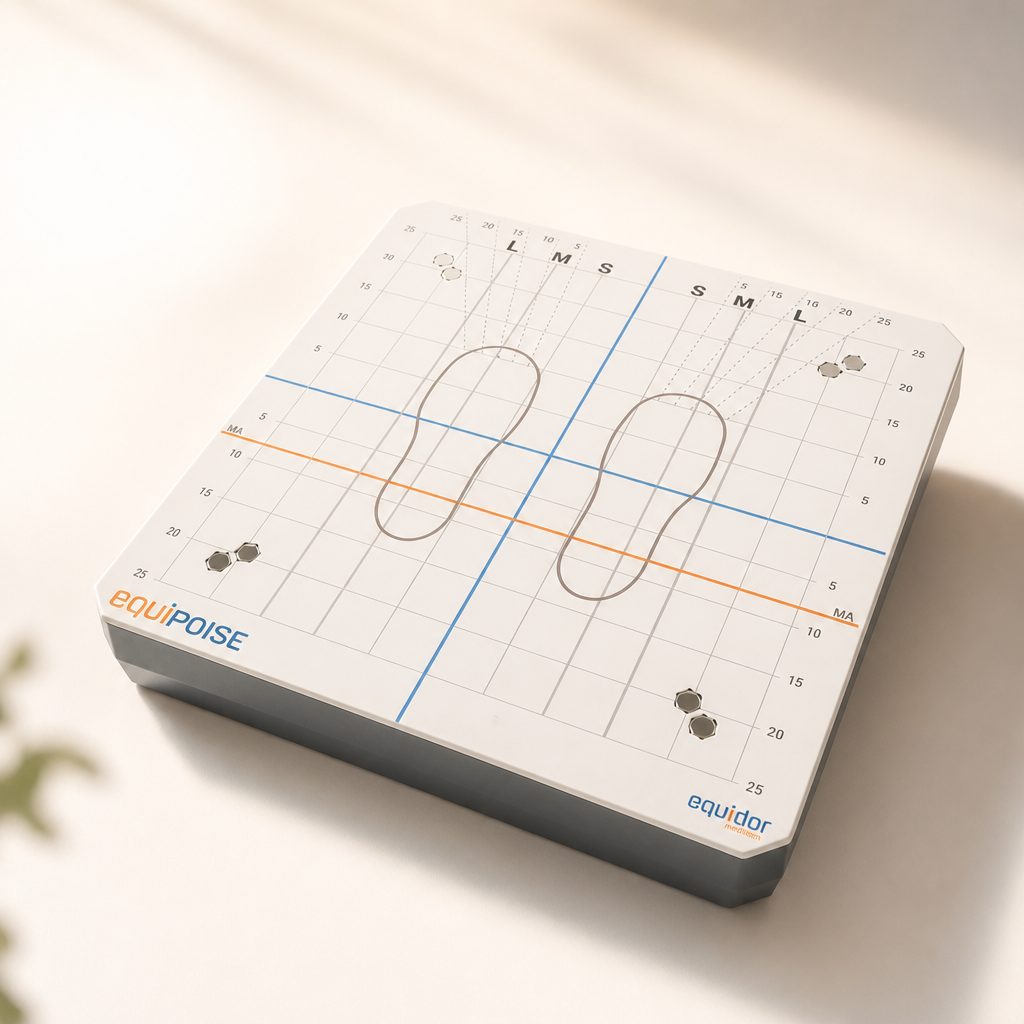
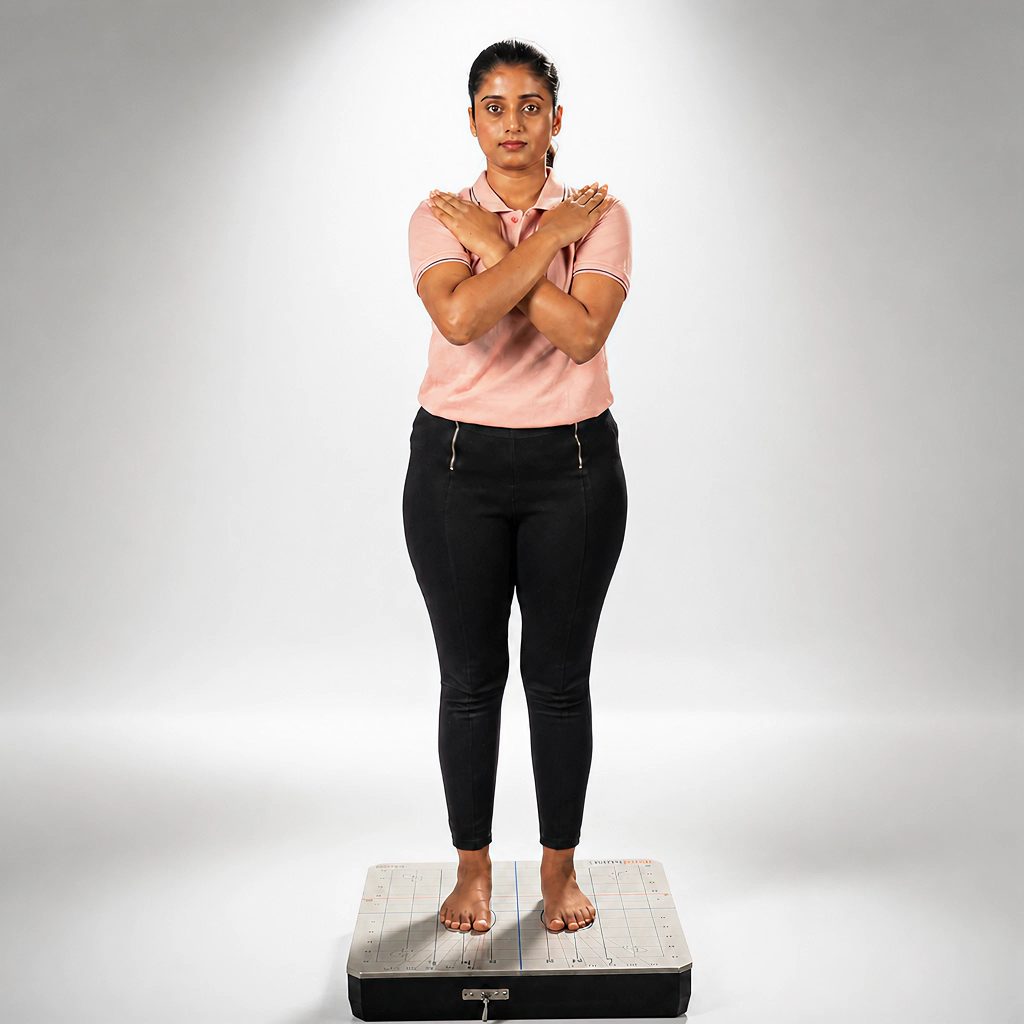
Romberg’s test has anchored bedside vestibular and balance examination for over a century, but its qualitative, observer-dependent nature limits what it can reveal. equiPOISE reimagines it as a quantitative, expandable assessment — a static platform on which dynamic postural strategies are systematically probed.
The test battery covers the full spectrum of sensory integration, motor execution, and cognitive–motor coupling: escalating sensory denial, escalating motor complexity, weight-bearing squats, rhythmic weight shifts in lateral and anteroposterior planes, limits of stability, dual task, and visual reference. At 60 cm square, the platform is generous enough for safe tandem standing and for game play even with feet wide apart. Gamified rehabilitation is built in, with each game targeted at a specific postural strategy — a maze that trains foot-intrinsic strength and control, sustained-pursuit weight-shift games that build slow control and frustration tolerance, squat-driven games for lower-limb engagement, and arithmetic-direction games that couple cognition with motor planning. Results are presented in primary form — time series, square-grid plots, and ground reaction force traces — and enriched with derived parameters including vestibular and somatosensory scores. Frequency-distribution plots add a further layer of insight, mapping total energy and its relative distribution across diagnostic bands.
Key Capabilities
- Wide weight range (10–400 kg) suitable for paediatric through adult patients
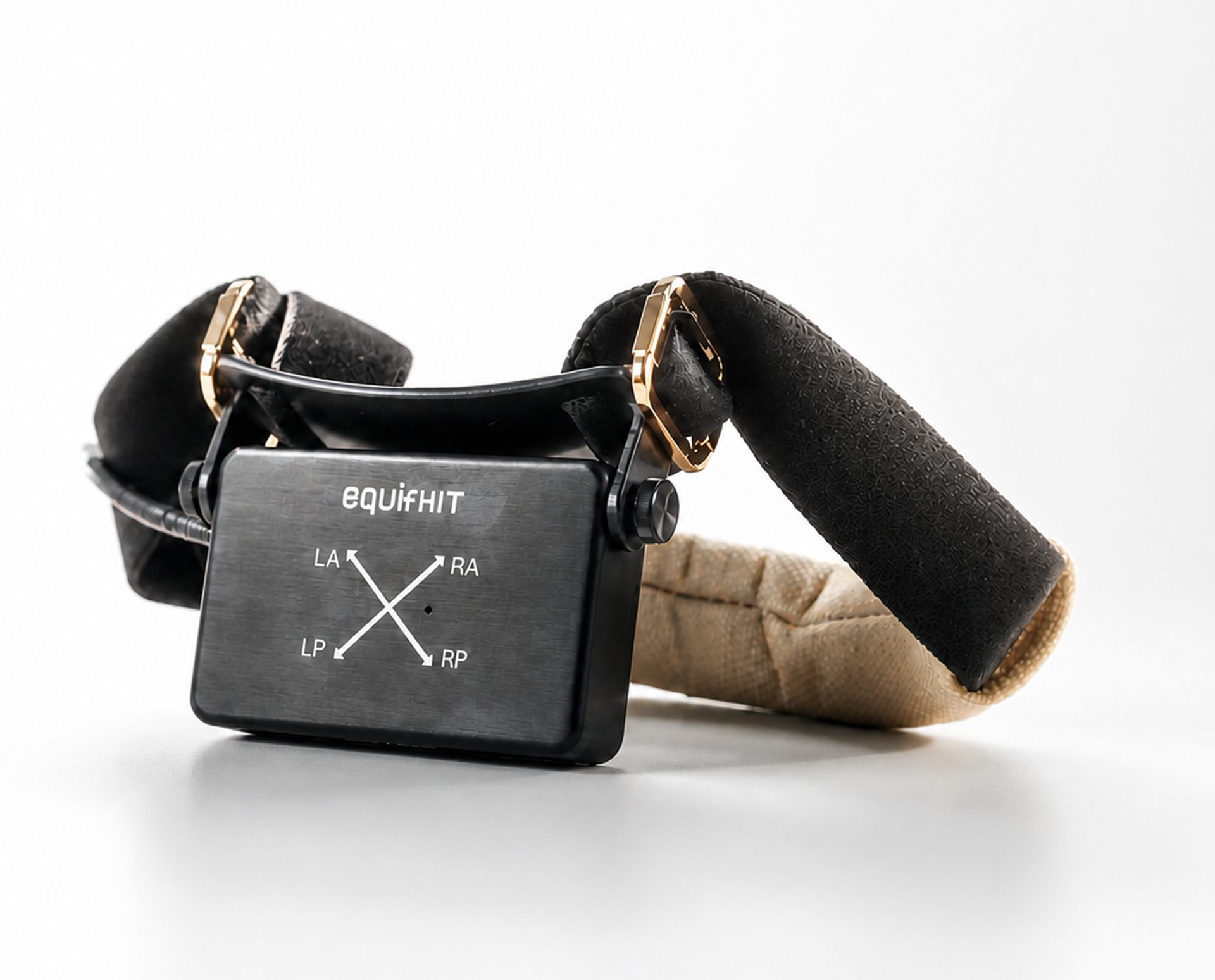
- Four force sensors per platform on a 60 × 60 cm magnesium-alloy force plate
- Real-time CoP square-grid plot plus lateral and anteroposterior time-series plots
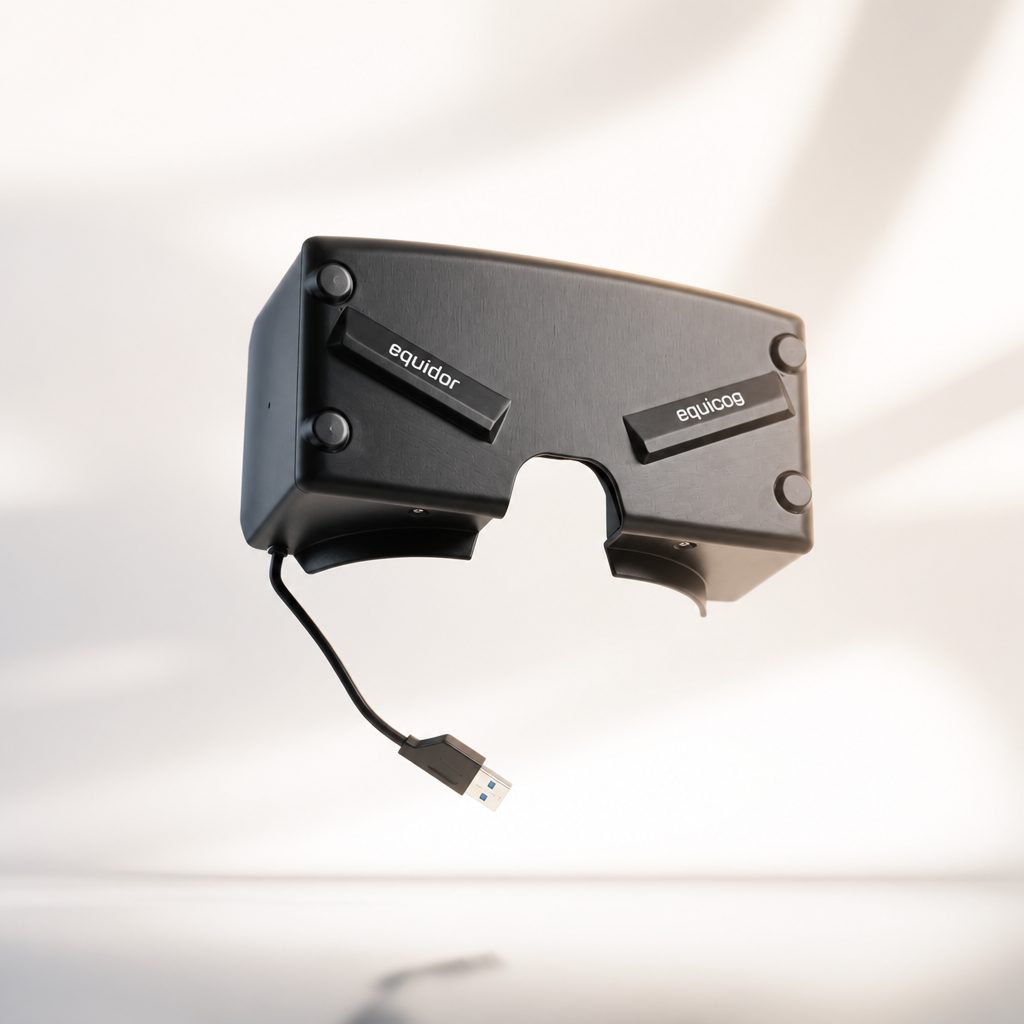
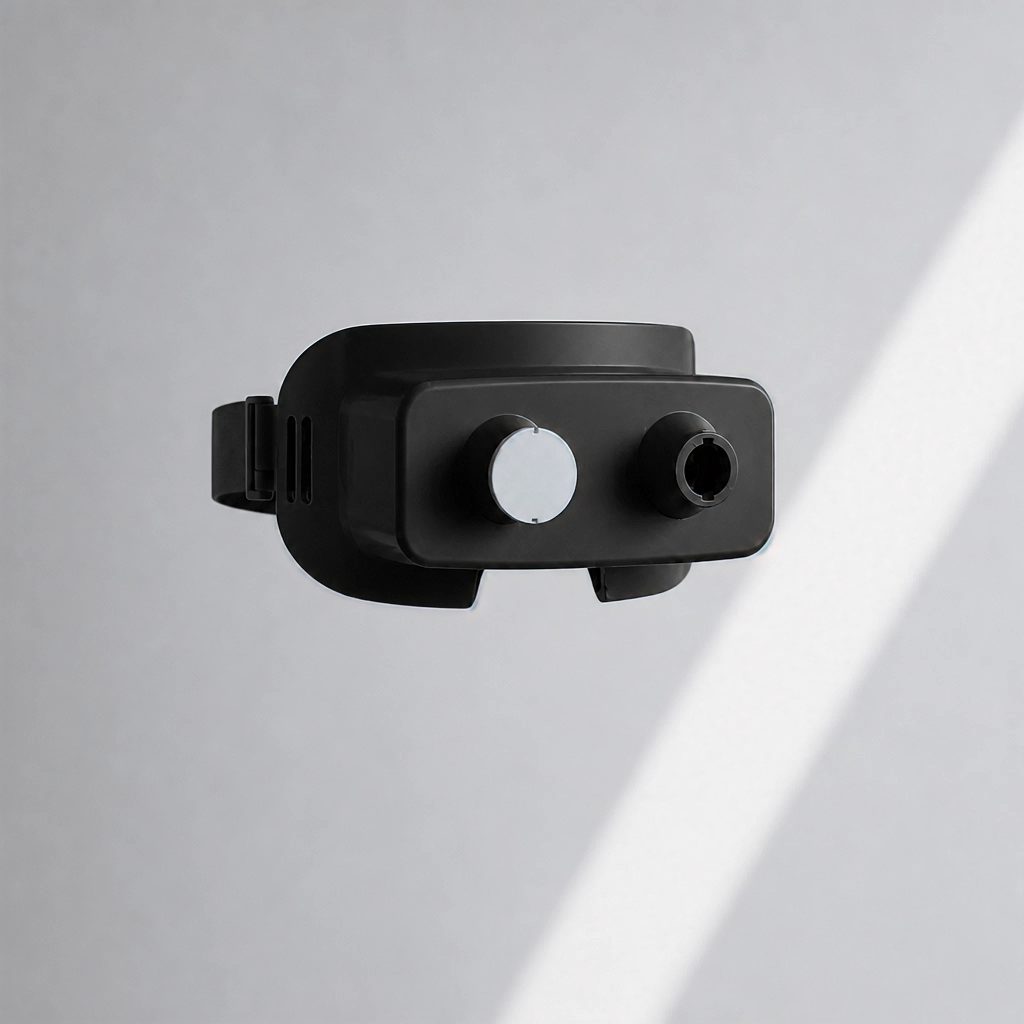
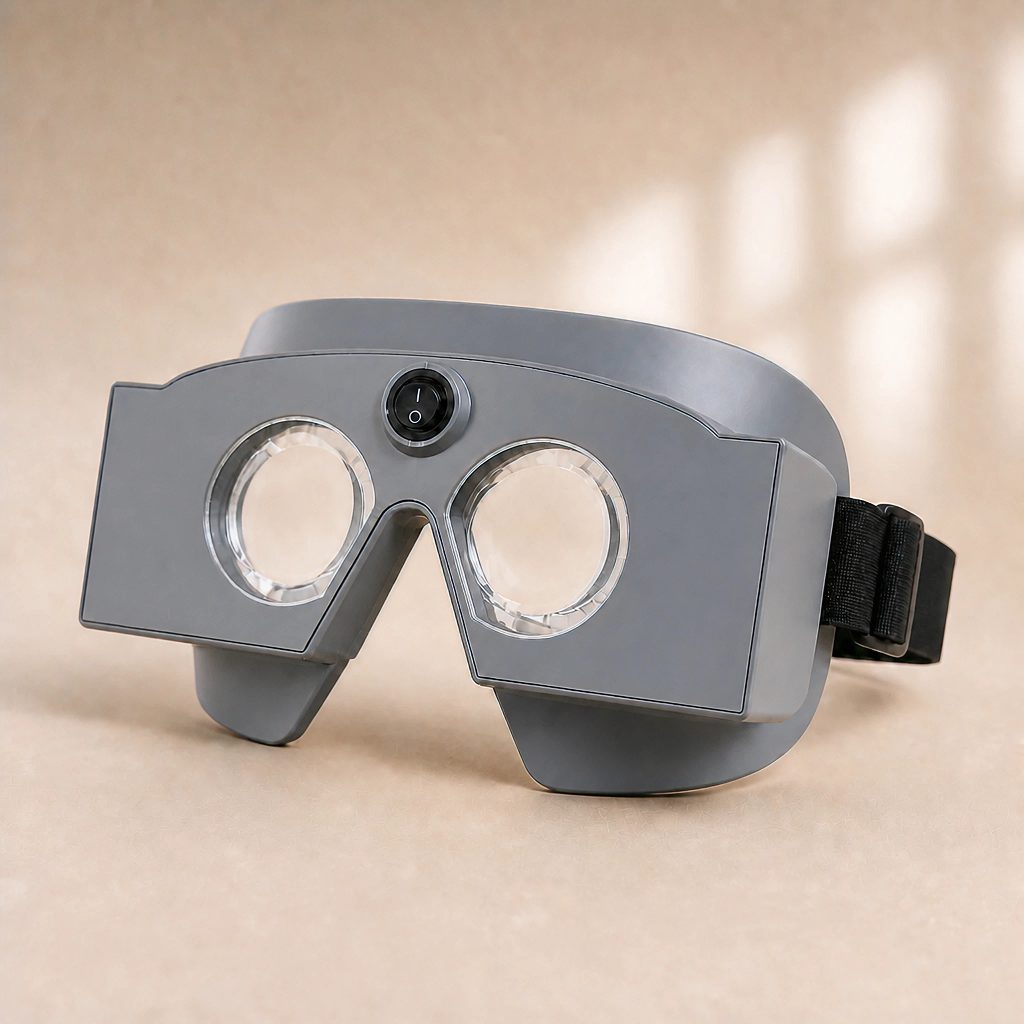
- Sway-referenced vision via head-mounted dome
- Proprioception-elimination cushion (6 inches) for surface-condition manipulation
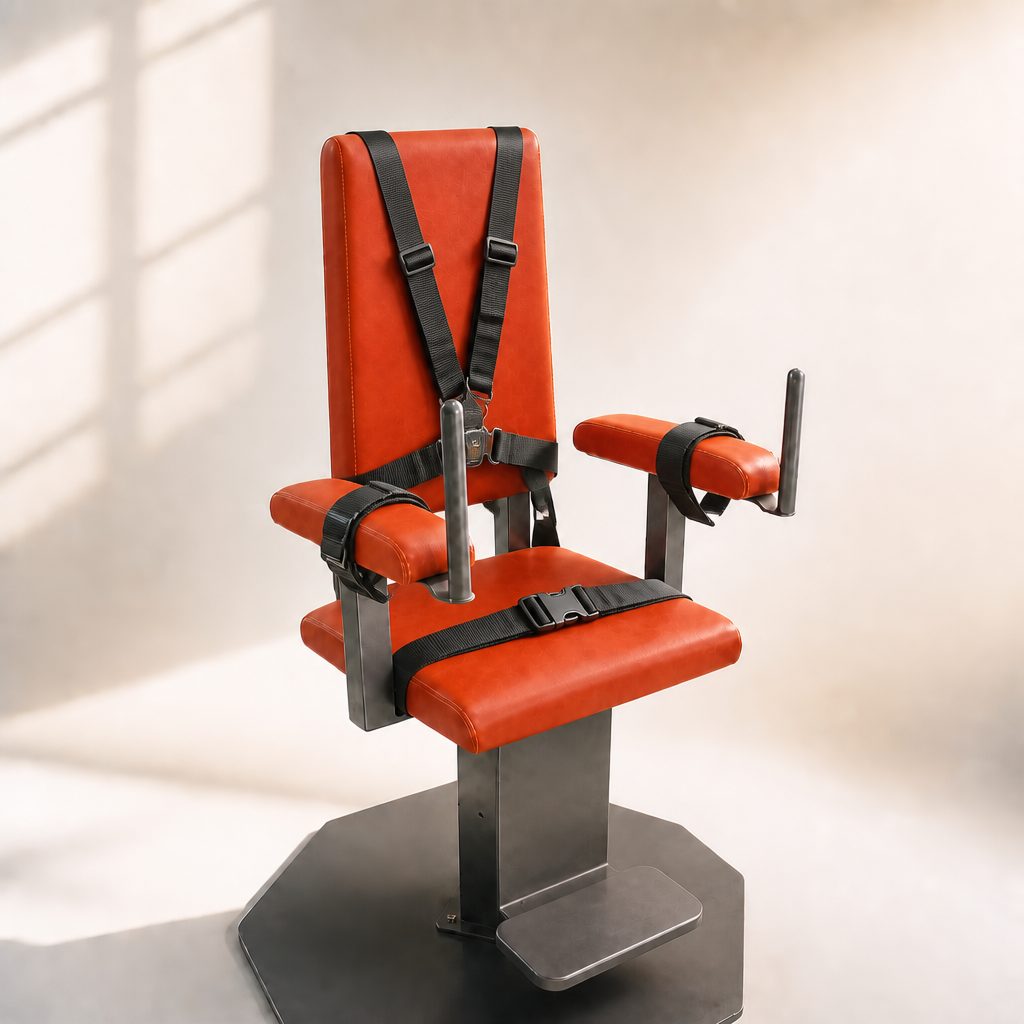
- Paediatric and adult fall-prevention railings
Hardware Specifications
Test Protocols
Diagnostic Protocols
- Escalating Sensory DenialComputerised sensory integration of balance.
- Escalating Motor ComplexityComputerised motor control of balance.
- Weight Bearing Squats
- Limits of Stability
- Rhythmic Weight ShiftsLateral (right ↔ left).
- Rhythmic Weight ShiftsAnteroposterior (front ↔ back).
- Tandem and Stepping
- Visual Reference
- Dual Task Test
- User-defined protocol slots
Therapeutic Protocols (Rehabilitation Games)
- Bergmann
- Shooting Gallery
- Runner
- Rhythmic Weight Shift
- Pong Ball
- Maze
- Cognitive Runner
- Bird Runner
- Draw the Line
- Survival Center
- Walk and Dodge
- Teddy Dispatcher
Postural strategies addressed by the rehabilitation suite: dynamic weight-shift enhancement; short-latency, high-velocity, high-stability weight shifts; direction-specific protocols for unilateral vestibular hypofunction; anteroposterior stability; stepping and cross-stepping strategies; gross and fine motor control.
Highlights
- Reimagines the century-old Romberg test as a quantitative, expandable assessment — same clinical intuition, now measurable and repeatable.
- Derived vestibular and somatosensory scores translate a complex sway recording into a clear next-step decision for the clinician.
- One battery covers sensory denial, motor complexity, weight-shift, dual-task and cognitive–motor coupling — the full sweep of postural challenges in a single session.
- Each rehabilitation game is mapped to a specific postural strategy, so therapy moves from generic exercise to targeted retraining.
- Suits everyday balance practice while exposing research-grade outputs — frequency distributions, ground-reaction force traces — when the case demands them.