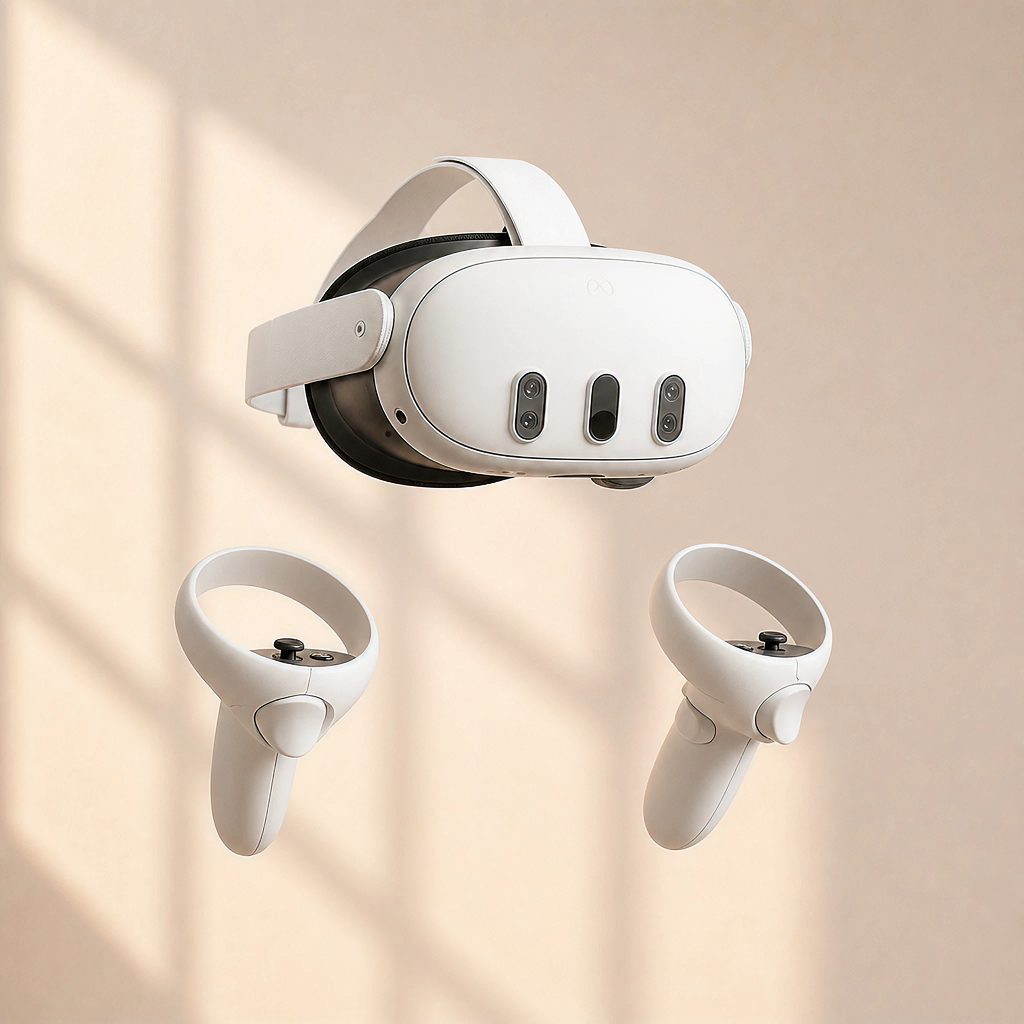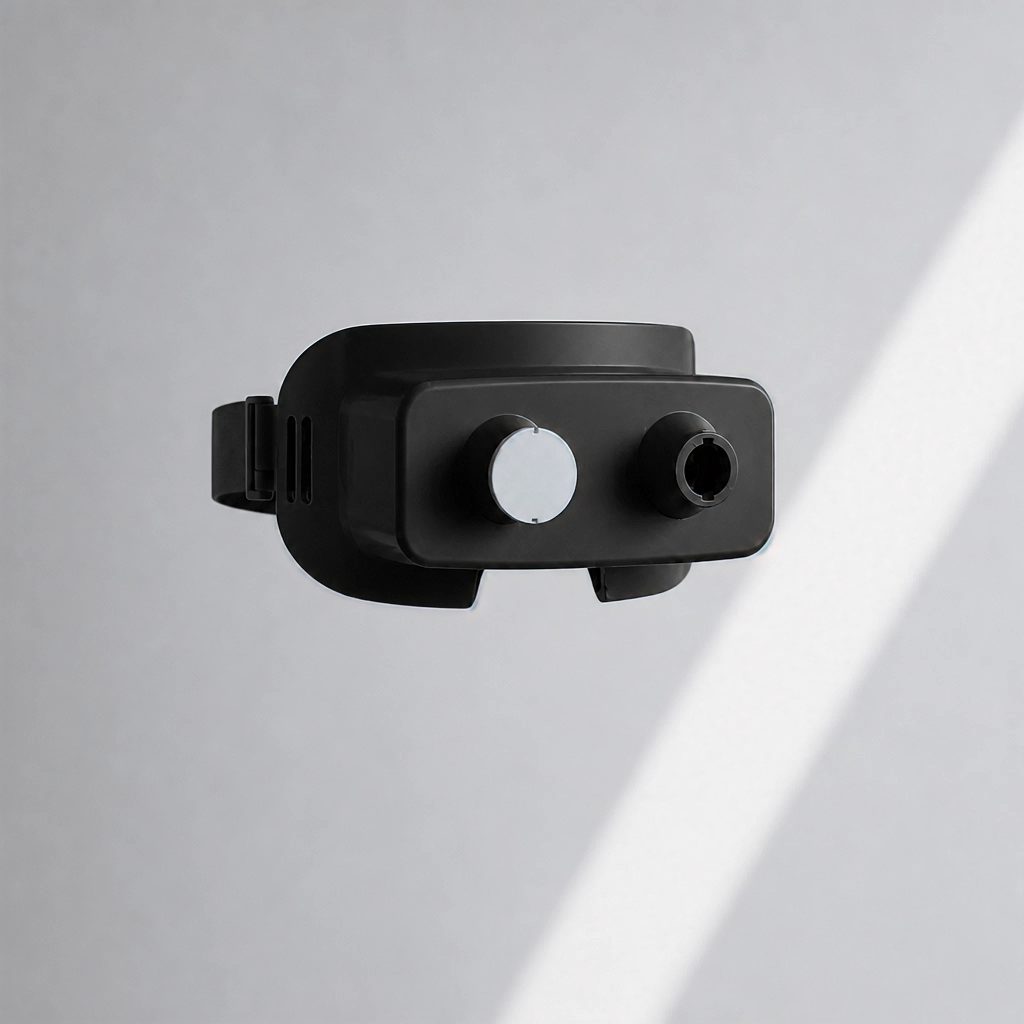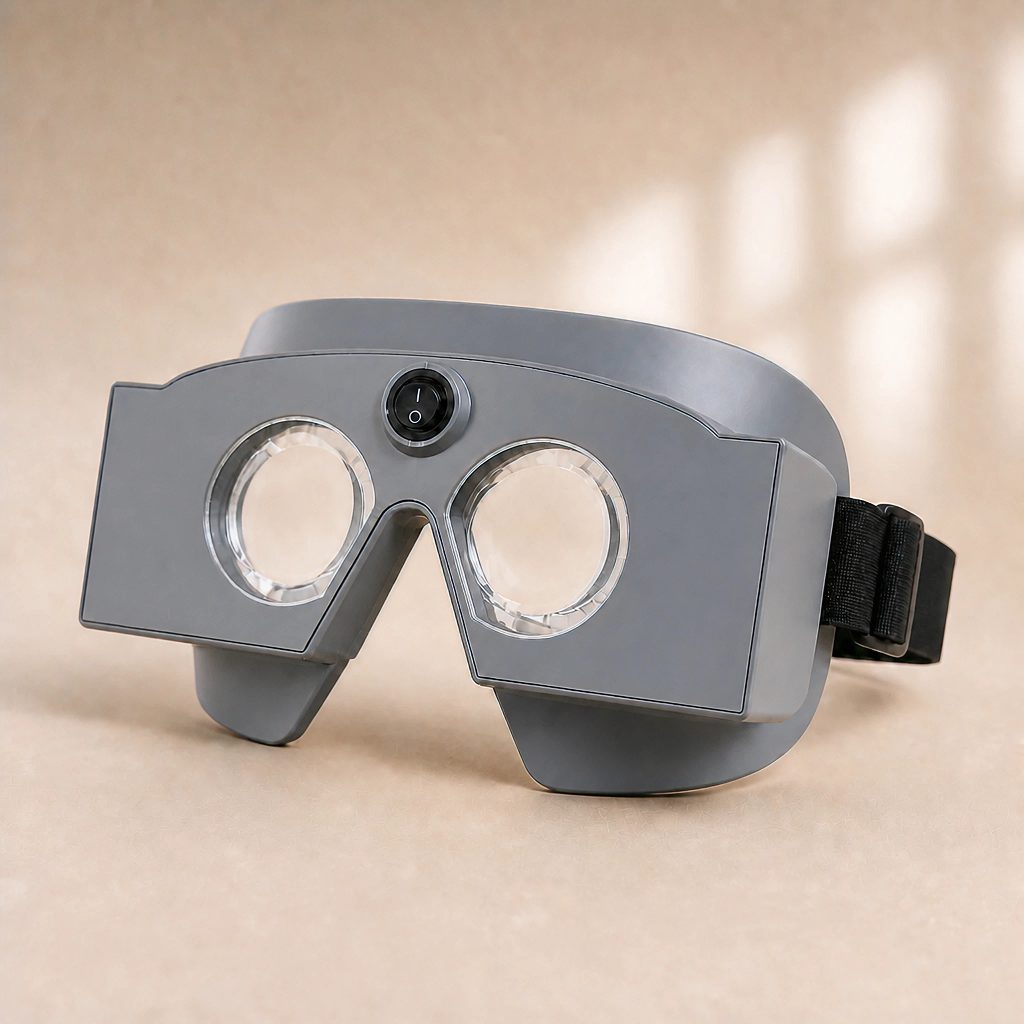

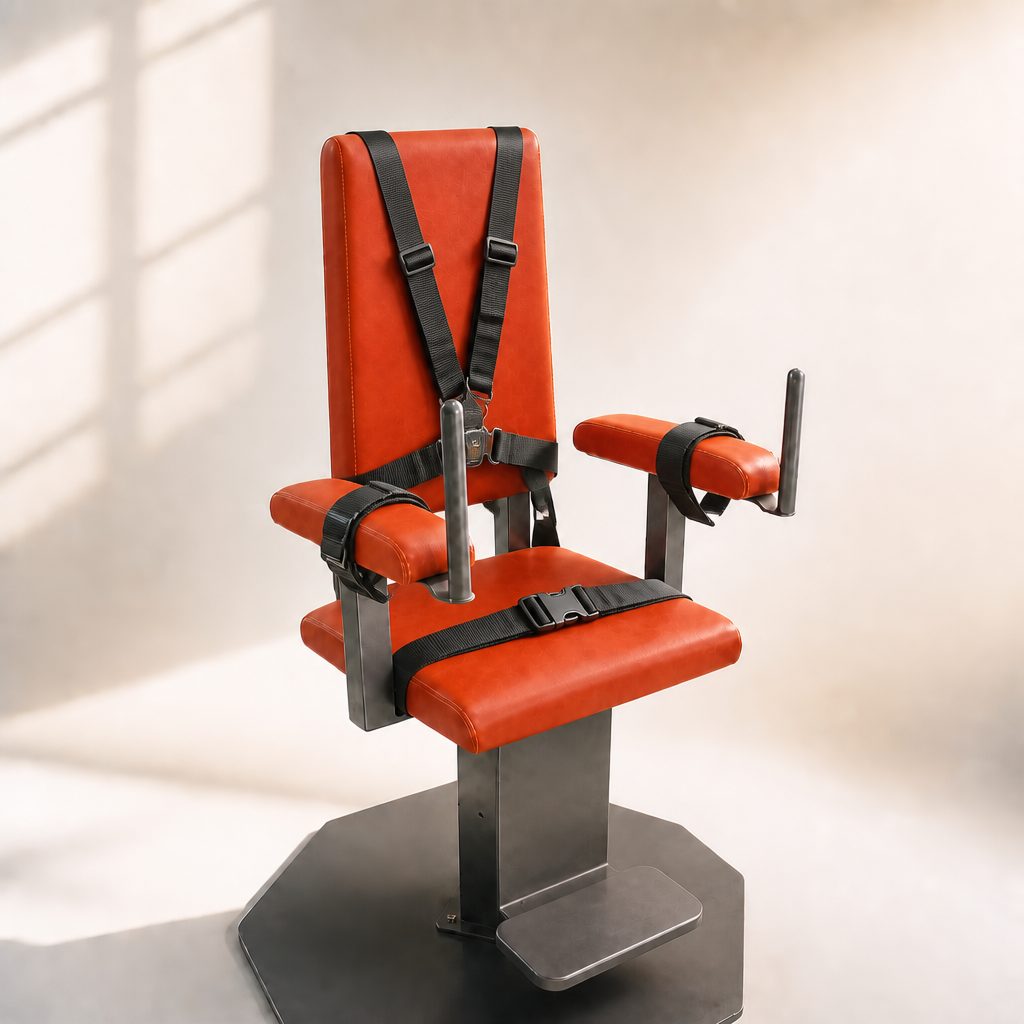
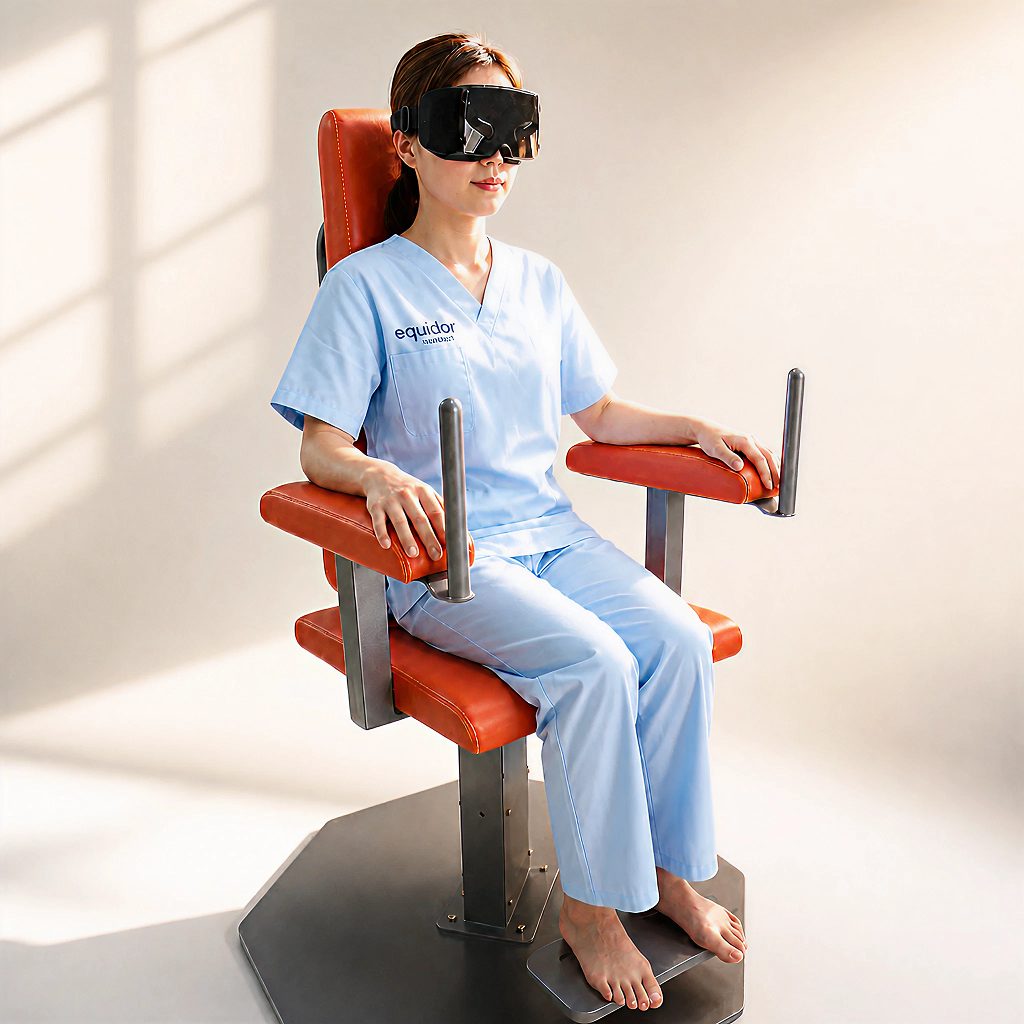
Manual rotatory chair. Long-run low-friction rotation, equiCOG-ready for rotational testing and vestibular rehabilitation.

Rotational testing remains one of the most informative ways to probe the VOR across a controlled velocity profile, yet conventional swivel chairs struggle to deliver smooth, sustained rotation — and the moment an eye-tracking device is added, cable entanglement becomes a recurring obstacle. equiSWIVEL is engineered to solve both. Low-friction bearings turn a single push into a long, smooth run of forty or more rotations, giving the clinician an ample window to deliver the stimulus and observe the response without repeated intervention.
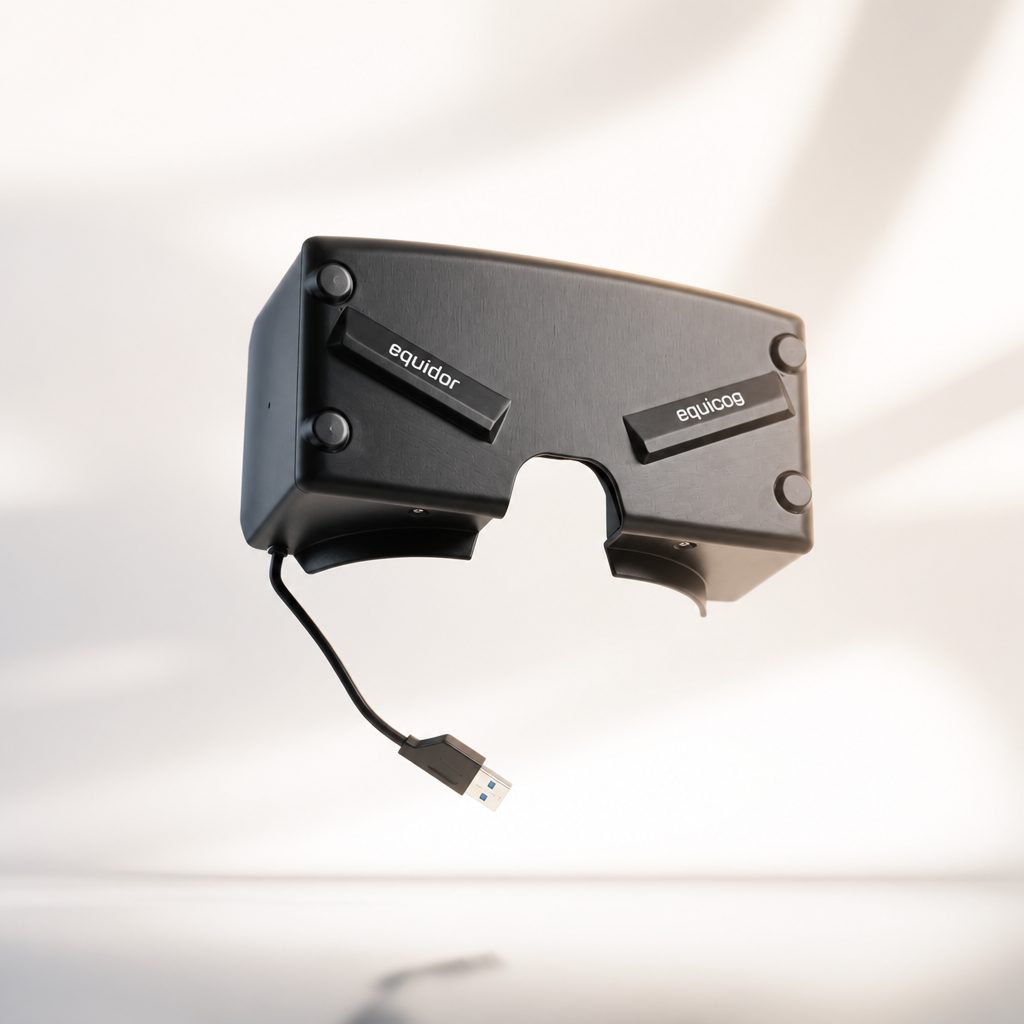
A purpose-built mount accepts equiCOG directly on the chair, eliminating wire tangle and allowing eye and head data to be captured continuously through extended rotation. The combination supports the full manual rotational workup — VOR with vision allowed, VOR with vision denied, VOR suppression, and sinusoidal chair rotation with manually delivered stimuli — all under the clinician’s direct, tactile control. The same platform doubles as a rehabilitation tool for unilateral and bilateral vestibular deficits, and for desensitisation and habituation protocols, making equiSWIVEL equally valuable on the assessment side and the recovery side of the vestibular journey.
Key Capabilities
- Low-friction bearing system — a single push sustains 40+ smooth rotations
- Purpose-built equiCOG mount eliminates cable entanglement during extended rotation
- Continuous capture of eye and head data through long rotational runs
- Full manual rotational workup under direct clinician control
- Doubles as a rehabilitation platform for unilateral and bilateral vestibular deficits
- Supports vestibular desensitisation and habituation protocols
Hardware Specifications
Test Protocols
Diagnostic Protocols
- VOR — Vision AllowedVisually-enhanced VOR with the patient fixating during rotation.
- VOR — Vision DeniedVOR assessment with vision occluded.
- VOR SuppressionClinician-delivered fixation target moving with the chair.
- Sinusoidal Chair RotationManually delivered sinusoidal stimuli for frequency-specific VOR assessment.
Therapeutic / Rehabilitation Protocols
- Unilateral Vestibular Hypofunction RehabDirectionally-targeted rotational exercises.
- Bilateral Vestibular Deficit RehabGraded rotational exposure to drive central compensation.
- Desensitisation ProtocolsControlled rotational exposure to reduce vestibular hypersensitivity.
- Habituation ProtocolsRepeated provocation to extinguish symptomatic responses.
Highlights
- A manually driven chair keeps the clinician in the loop, so stimulus speed and direction adapt to the patient in real time — no pre-programmed sequence imposed.
- Dedicated VOR-suppression protocols probe cerebellar flocculus function, a circuit conventional caloric testing cannot reach.
- Sinusoidal rotation with and without vision exposes visuo-vestibular dissociations that often localise a central lesion when caloric and head-impulse tests are equivocal.
- The low-friction bearing sustains long-run rotation cleanly, opening both the per-rotational and post-rotational measurement windows in a single session.
- The same chair drives vestibular rehabilitation across central, peripheral and habituation protocols, doubling as a therapy device once the diagnostic workup is done.